Nagaland
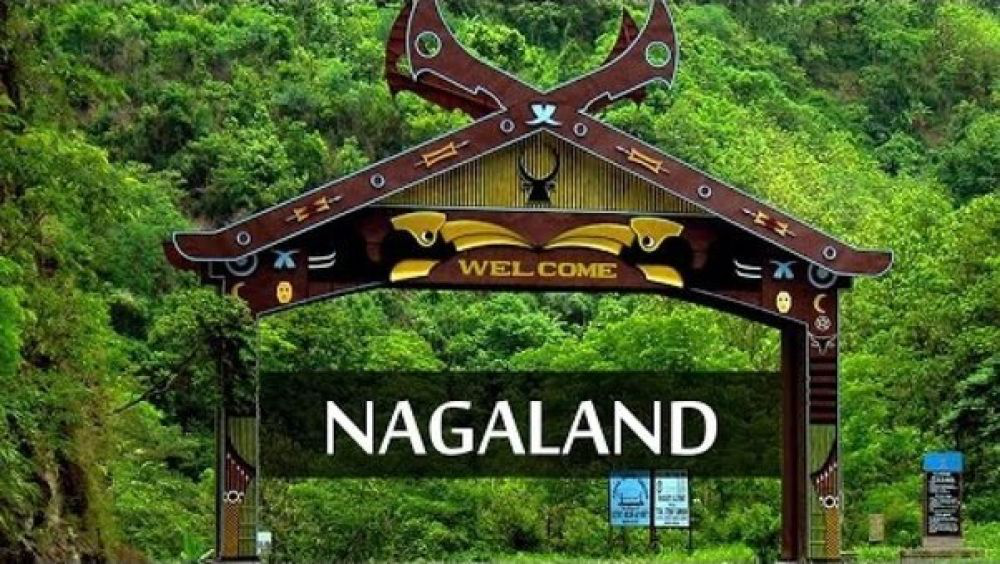
A land engulfed in mystery, inhabited by vibrant people zealously guarding their culture – dancers, warriors, head-hunters; mountains, valleys, forests – all these forms the portrait of Nagaland the moment the word is uttered. But, from extreme mystery to hosting a globally famous cultural festival, Nagaland has come a long way over the years and etched a name for itself in the world’s tourist destination map.
Nagaland came into being on 1st December, 1963 as the sixteenth state of the Indian Union with Kohima as her capital. With a geographical area of about 16,579 sq km, she shares her borders with Assam in the North and West, Myanmar and Arunachal Pradesh in the East and Manipur in the South. The topography of the state is nearly all hilly, the highest peak being Saramati (3841m) in the district of Kiphire. Many rivers cut through this mountainous terrain, like sharp swords slicing through rocks, the main ones being Dhansiri, Doyang, Dikhu, Milak, Tizu and Zungki.
The climate of Nagaland is nothing but perfect. With pleasant summers when temperatures do not average above 31o C and winters when they don’t average below 4o C, the place is a ‘perpetual holiday destination’.
The best months to visit Nagaland are between October and May, when the landscape wears a green carpet and the flowers light up the skies with their bright hue. Rhododendrons and Orchids cover the landscape of Nagaland and one cannot miss them even as he is driving or trekking the challenging terrain. Traditionally the Naga people have been hardcore hunters, but awareness in conservation has resulted in common sighting of endangered birds and animals. The rare Blyth’s tragopan (Tragopan blythii) is a resident of Nagaland and can be observed in plenty. In 2012, mass trapping and capture of migrating Amur falcons (Falco amurensis) was discovered in Nagaland and a successful campaign was initiated to prevent their killing. As part of this campaign, three birds were fitted with 5 gm satellite transmitters that allowed them to be tracked during their migration.
A 21st century creation of Nagaland is the Hornbill festival, an event which is now getting known globally. During Hornbill, which takes place from 1st December to 10th December, the entire Naga culture is showcased in full splendor in the Kisama village of Kohima district. The Government of Nagaland welcomes one and all to this mega event for a preview of what the state has to offer in terms of culture, traditions, tourism interest and industry.
A population of only about 1.9 million, the numbers may sound meagre when compared with the vast population of the Indian peninsula; but these few people are composed of 17 different major tribes, each representing a unique cultural system. With a population density of 120 persons per sq km, generally one major or minor tribe enjoys predominance across each of the 16 administrative districts.
Spirits, fertility, social bonding and purification are the key elements that form the essence of the Naga festivals – the custom that each tribe follows, translates into a festival. These traditional events, combined with life in the rural areas, are exceptionally engaging and distinctive. All of them are annual events with fixed dates; hence, before visiting Nagaland, the interested traveller can arrange his or her calendar accordingly. The first festival takes place in January and the last (or is it the last recorded?) in December – no matter what the season is, some festival is always round the corner.